Complete Decongestive Therapy remains the gold standard for lymphedema treatment. But what happens when patients—or clinicians—simply can’t sustain the traditional model?
That question is at the heart of research being conducted by Rachel Alonzo, OTR/L, CLT, of Mayo Clinic, who joined a recent Lympha Press Research Roundtable to discuss her work with Modified Decongestive Therapy (MDT).
An occupational therapist for 24 years and a lymphedema therapist for more than a decade, Alonzo isn’t questioning whether Complete Decongestive Therapy (CDT) works.
She’s asking whether we need another way to deliver its essential components.
The Clinical Reality Behind the Protocol
Traditional CDT can produce significant results, often quickly. But Alonzo sees an increasing disconnect between the intensity of the model and the realities facing clinicians and patients in the United States.
Insurance limitations can restrict treatment visits. Clinics face staffing and scheduling pressures. Supplies may be difficult to obtain in certain settings. Patients may live hours from the nearest certified lymphedema therapist.
And clinicians themselves are feeling the strain.
Alonzo described talented lymphedema therapists leaving the specialty because of the physical demands, patient volume and burnout associated with providing intensive care.
Meanwhile, patients may wait months for an appointment.
That raises an important question for the profession:
If the ideal treatment model isn’t accessible to a patient, how can we preserve its essential principles while creating something the patient can actually do?
From Therapist-Delivered Care to Therapist-Guided Care
Alonzo’s MDT model uses familiar components of decongestive therapy but introduces them progressively, placing greater responsibility—and control—in the patient’s hands.
At the initial visit, Alonzo completes her assessment, measurements and goal setting. But treatment immediately moves toward self-management.
Patients begin with a simple home program consisting of four lymphatic exercises and instruction in self-manual lymphatic drainage (MLD).
Compression is then incorporated based on the patient’s needs and tolerance. Rather than relying exclusively on traditional short-stretch bandaging, Alonzo frequently utilizes adjustable Velcro-style bandage alternatives that patients can apply and modify themselves.
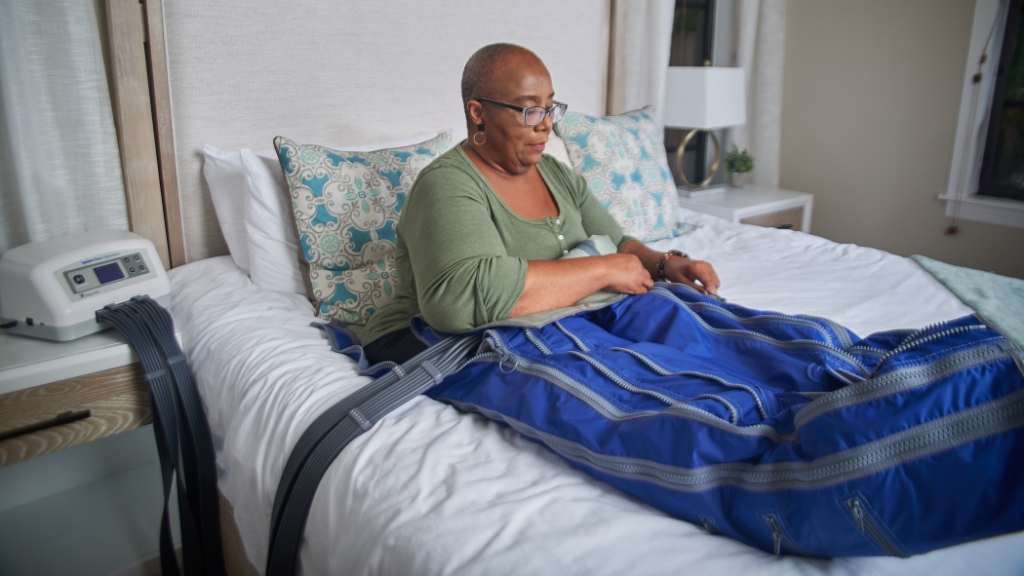
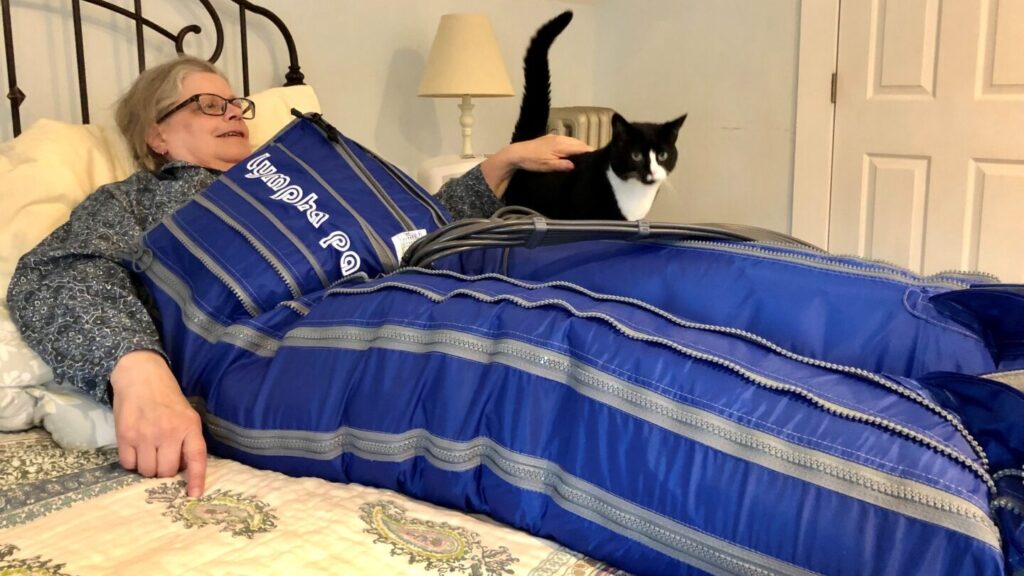
Pneumatic compression may subsequently become another component of the plan.
Instead of giving patients everything at once, MDT builds the program in what Alonzo describes as “bite-sized pieces.”
The clinician’s role changes as well.
Rather than providing intensive daily treatment, the therapist becomes an ongoing assessor, educator and coach—remeasuring, performing hands-on lymphatic drainage, troubleshooting barriers and advancing the home program as the patient progresses.
Portal communication and virtual visits can provide additional support between in-person appointments.
What Is the Data Showing?
Alonzo is clear that MDT is not intended to replace CDT, which she continues to consider the gold standard.
The trade-off appears to be time.
Where intensive CDT may produce dramatic changes within weeks, Alonzo reported that participants in her study have achieved at least a 10% reduction in limb volume over approximately three to five months, with associated improvements in quality of life.
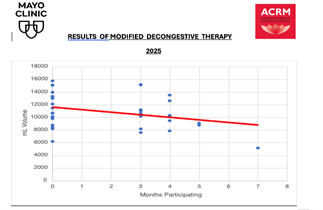
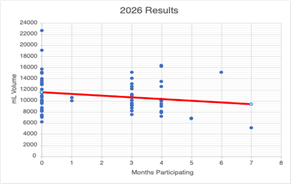
She also reported that some patients are progressing toward reductions comparable to those achieved through CDT, although over a longer period.
Patients in her program are generally followed for approximately 10–12 visits over five months to a year, depending on geography and individual needs.
For clinicians facing packed schedules, that distinction matters. Helping appropriate Stage 1 and Stage 2 patients become more self-sufficient may also preserve valuable treatment capacity for medically complex Stage 3 patients who require more frequent hands-on intervention.
Perhaps the Most Important Variable Is Compliance
One of the most interesting themes from the Roundtable wasn’t about a particular garment, device or technique.
It was about what patients will actually do.
Compression, Alonzo acknowledged, is frequently the most difficult component of treatment. Some patients arrive saying they simply will not wear it.
Rather than treating that resistance as failure, MDT begins with what the patient can manage.
Perhaps that means exercises and self-MLD first. Perhaps compression begins for eight hours during the most active portion of the day and progresses toward 16 hours. For another patient, nighttime compression may be the first achievable step.
The approach is individualized and progressive.
Success with one manageable behavior can create willingness to attempt the next.
That philosophy extends to exercise as well. A homebound patient who says, “I can’t exercise,” may still be able to perform ankle pumps before getting out of bed.
The intervention doesn’t have to begin with everything.
It has to begin somewhere.
The Three Components That Still Matter
For all the modification within MDT, Alonzo’s emerging data continue to reinforce three fundamental components of decongestive care:
Lymphatic drainage. Compression. Movement.
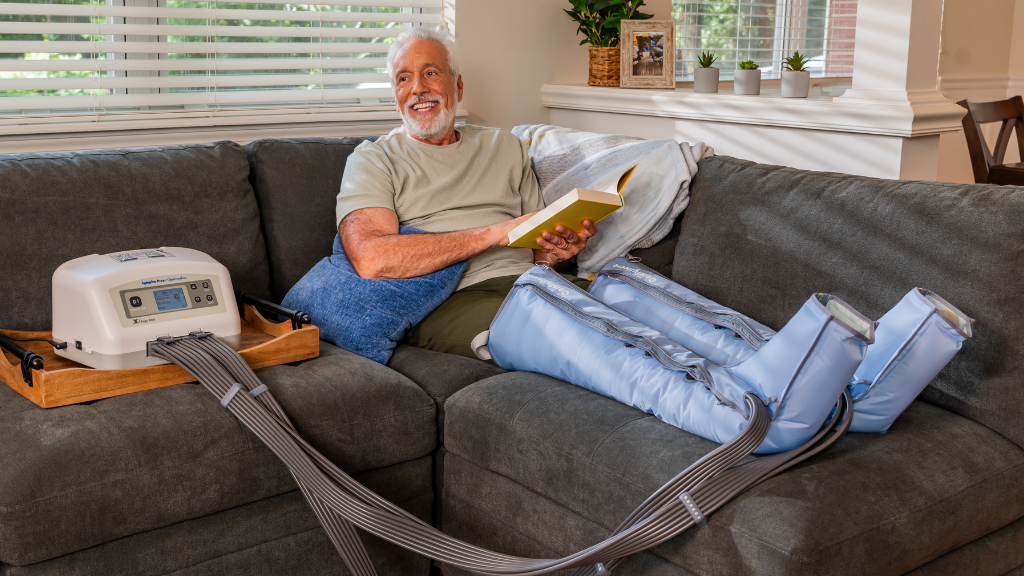
Pneumatic compression can provide significant assistance but does not necessarily eliminate the value of MLD. Likewise, exercise without appropriate compression may not provide the desired results.
What changes in MDT is not necessarily what clinicians know about lymphedema management.
It is how that knowledge is delivered.
And that may be the larger conversation Alonzo’s work invites clinicians to consider.
Clinical excellence isn’t simply knowing the ideal protocol. It also requires understanding the person who must live with that protocol every day.
Alonzo offered perhaps the best summary of the philosophy behind her research: patients and therapists must work as a team and find the middle ground where an effective program is also one the patient can successfully implement.
For a profession confronting access challenges, clinician burnout and increasing demand for lymphedema services, that idea deserves attention.
Sometimes modifying the path doesn’t mean lowering the standard. It means finding a path the patient can actually travel.