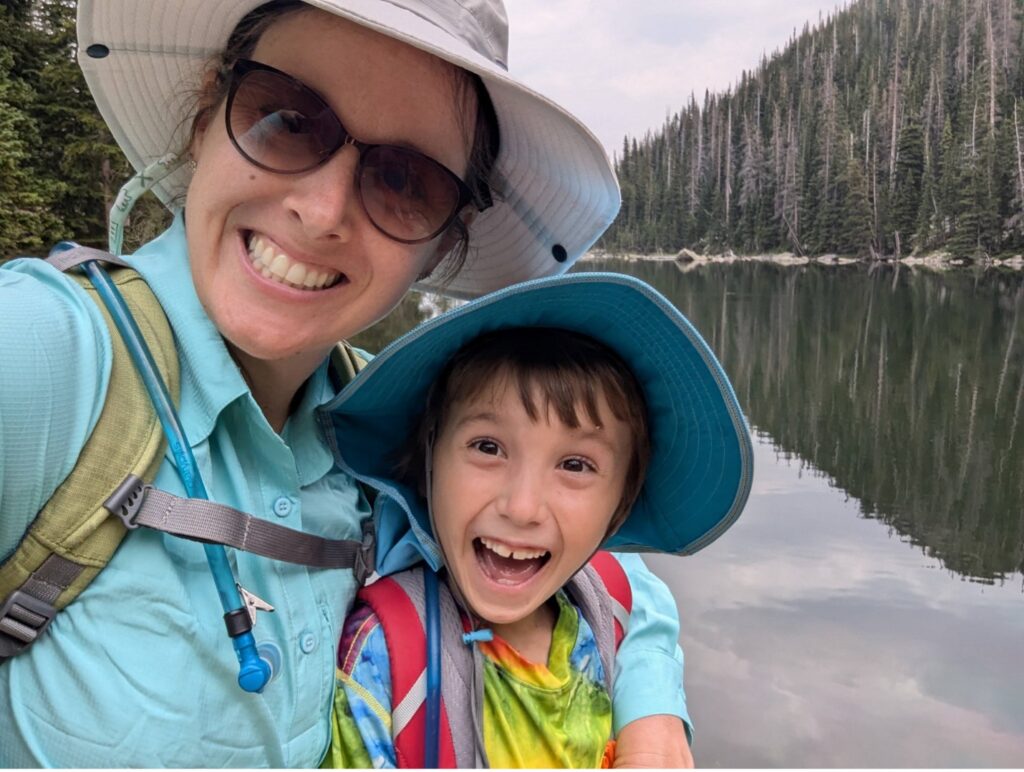
Sarah Brunskill was unaware of lymphedema before her son, Grayson, was born. But that quickly changed when he was diagnosed with primary lymphedema. “I had to buckle up and learn a lot,” says Brunskill, a health researcher and National Institutes of Health parent advocate for lymphedema.
Brunskill shares her family’s story and offers advice on preparing children with lymphedema for a confident and successful school year.
A Surprise Diagnosis
Brunskill’s pregnancy with Grayson was normal, and there were no indications that he had any health problems. But when he was delivered, he had swelling all over his body. “He immediately went to the NICU,” says Brunskill. The hospital performed tests, but nothing notable showed up.
Grayson was eventually diagnosed with primary lymphedema, a form that people are born with or develop early in life. It happens when the lymphatic system doesn’t form properly and leads to swelling from lymph fluid, often in the arms and legs.
Rare Form of Lymphedema
Primary lymphedema is rare, and Grayson’s presentation is even rarer. Most children with primary lymphedema have most of the swelling in one limb, but he experiences swelling in both hands and legs.
It was challenging to get proper treatment for Grayson since few providers have experience with lymphedema in children. “There’s this assumption that young kids don’t get lymphedema,” says Brunskill. “It’s never fun when you go to a top institution and they tell you they’ve only seen this in textbooks.”
Tips for School Life with Lymphedema
Navigating life with an infant and toddler with lymphedema had its own challenges, such as getting the right compression garments. Once Grayson entered preschool and then elementary school, Brunskill faced new challenges, but her persistence and positivity smoothed the way.
Brunskill offers seven back-to-school tips for parents and caregivers of children affected by lymphedema:
#1: Communicate Early with Teachers and Care Providers
Whether a child with lymphedema is in daycare, preschool, or elementary school, Brunskill emphasizes the importance of early communication. “Any time Grayson changes schools, teachers, or care providers, the tradition is that I send an email,” she says.
The start-of-the-school-year note introduces her son and:
- Describes compression garments and why he wears them
- Explains lymphedema and cellulitis (a potentially dangerous infection that people with lymphedema are prone to developing)
- Includes information links so providers can learn more
- Provides cellulitis education, including the risk that comes with cuts, bumps, and injuries, and Grayson’s typical symptoms
“I wholeheartedly believe people in school systems want to do what’s best for the child,” Brunskill says. “But they have a lot of kids, so it’s important to move with grace.”
#2: Teach Your Child Self-Advocacy
“One of the biggest things is training your child at an early age to advocate for themselves,” says Brunskill. “At some point, they will be in a situation where they need to advocate, and you won’t be there.”
Brunskill has taught Grayson, who is currently 8 ½ years old, to explain the basics of his condition and needs. “He has an age-appropriate spiel,” she says.
#3: Prepare Your Child for Questions from Other Kids
“Starting in kindergarten, kids would constantly ask Grayson questions about his compression garments, and it annoyed him,” says Brunskill. “We came up with a simple explanation, which is that his garments help his body just like someone’s eyeglasses help their eyes. Kids know what glasses are, so it makes sense to them.”
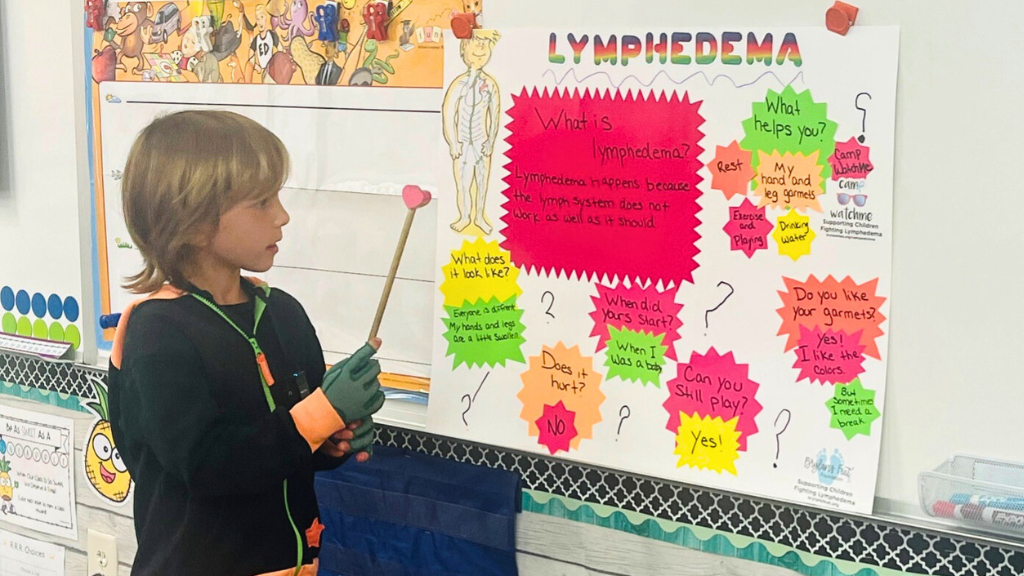
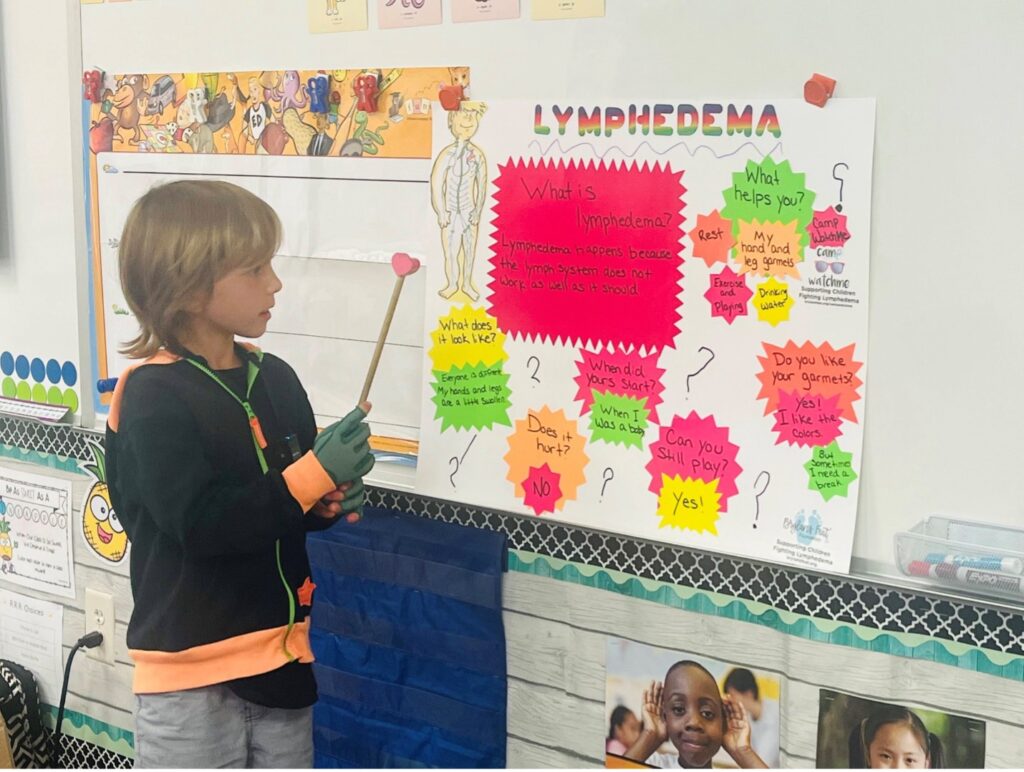
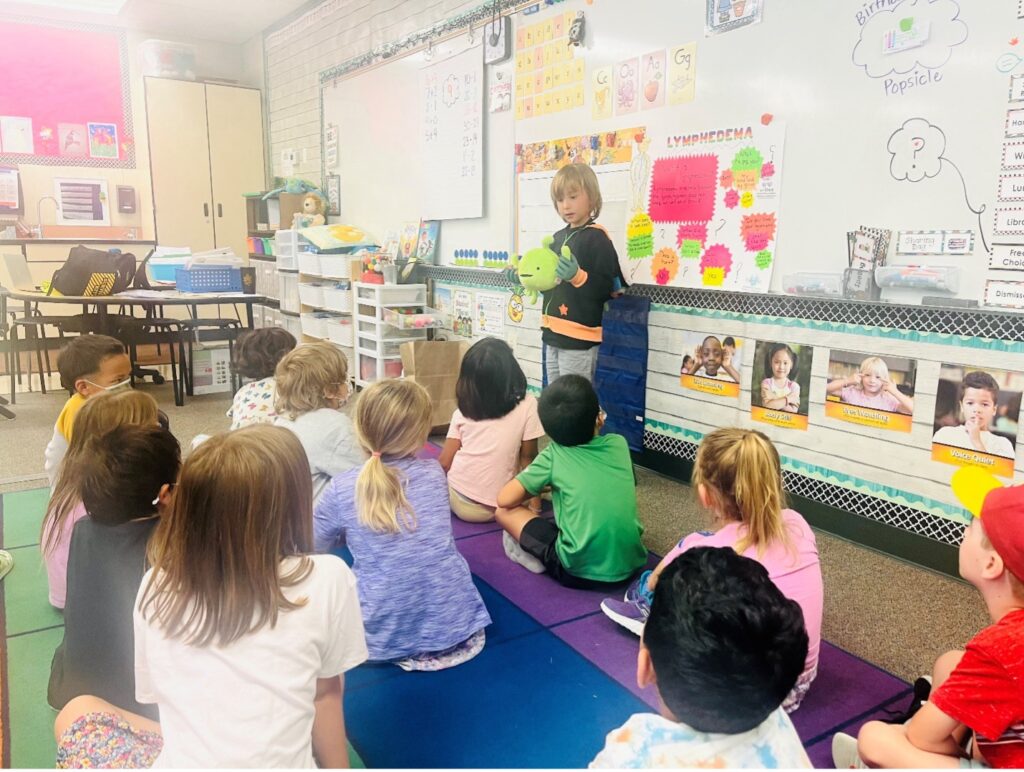
When Grayson became frustrated with repeated questions again, his first-grade teacher had an idea. She suggested he give a presentation to the class.
“We created a poster about lymphedema that answered the basic questions,” says Brunskill. “It allowed students to hear it from him, and it minimized having the same questions over and over again. Grayson also loved it because he felt special.” So far, he has given his lymphedema presentation to his first-, second-, and third-grade classes.
#4: Find a Balance
Although Grayson must wear his garments all day to control symptoms, Brunskill recognizes the importance of making occasional allowances. “I’m really trying hard not to have him feel resentful or held back because of his lymphedema,” she says.
Through trial and error, Brunskill learned how to strike the right balance. “He wants to play wall ball and can’t get a good grip on the ball with his compression gloves,” she says. “I just say, ‘You know what? Sure, you can take your gloves off to play wall ball.’ I want him to have as normal a childhood as possible.”
Brunskill has learned the right level of flexibility that protects her son’s health, but it wasn’t always easy. “I started out very militant about his care, but when you don’t have any flexibility, it causes more stress. Using a team approach makes him feel like he also has a voice in it,” she says. “I feel like that’s an easier way to adapt to situations as he grows and different things happen.”

#5: Make Care Routines Fun
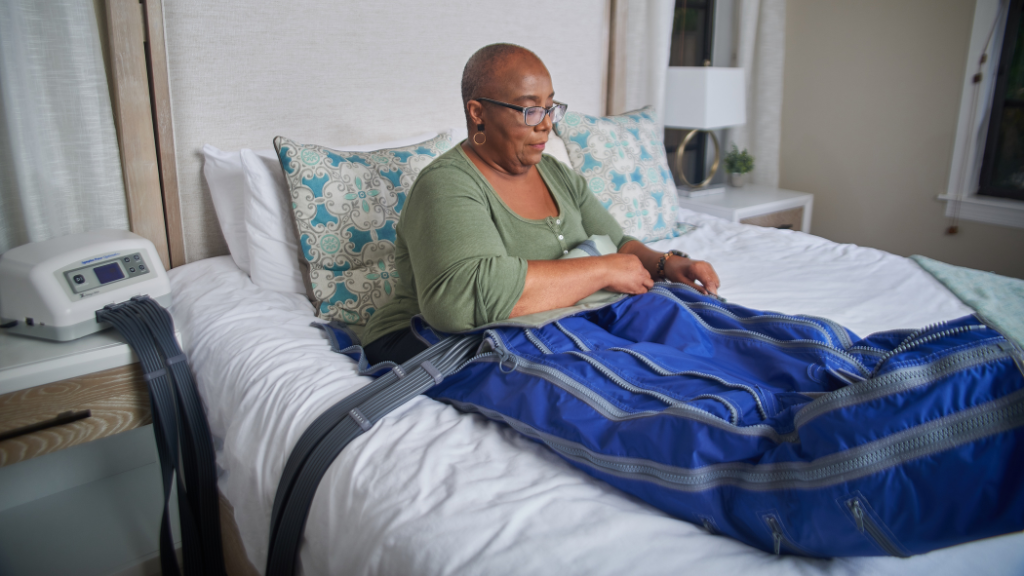
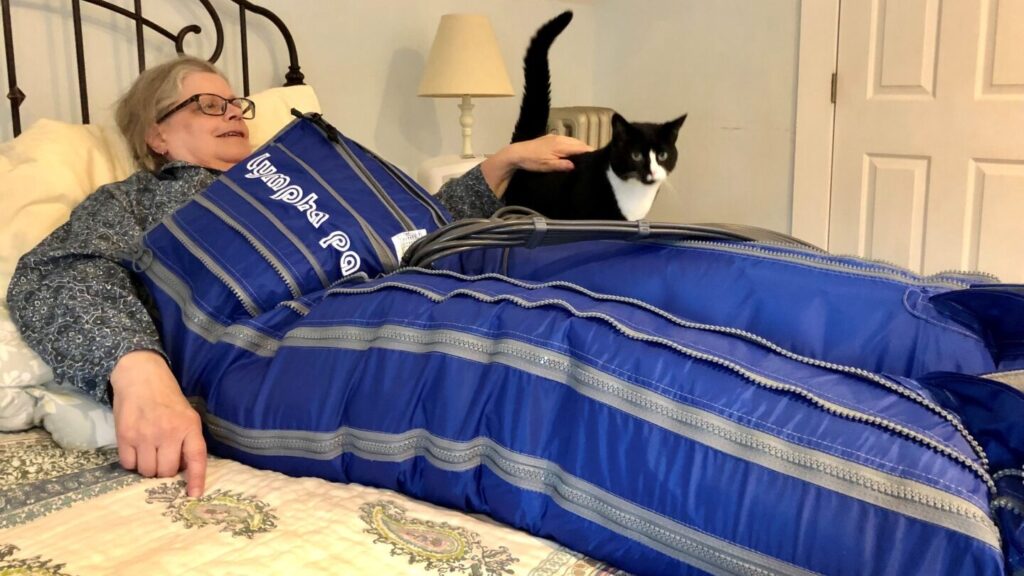
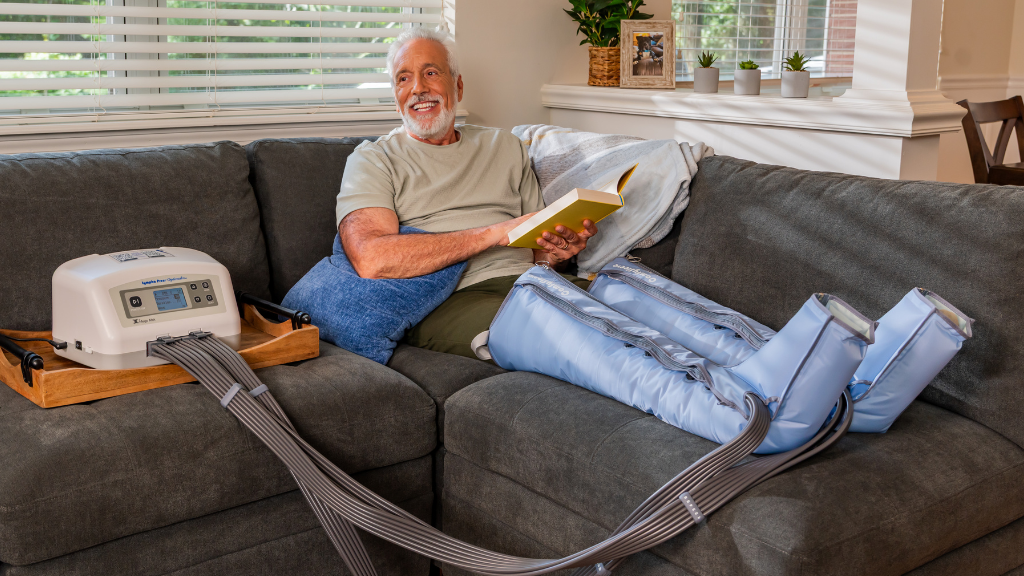
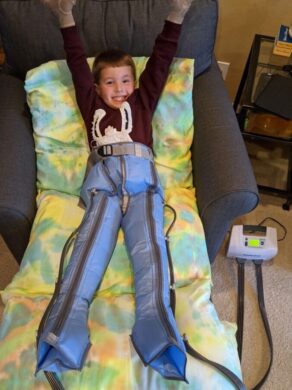
Grayson is great about wearing his compression garments and even enjoys choosing ones that are brightly colored. Lympha Press pumping sessions are also part of his care routine. However, he isn’t a fan of sitting still to pump.
“Grayson is really active, and sitting still is torture to him,” says Brunskill. “So, we pair the pumping sessions with something fun. If he wants to watch TV or be on his tablet, he has to pump.”
#6: Find Workarounds in Extracurriculars
Extracurricular activities can present challenges that require compromise or creativity. “Grayson is in a gymnastics class, but he needs to wear his leg garments. Going without them for an hour would cause severe swelling,” says Brunskill. But the leg garments can cause slipping, so she asked his teacher if he could wear sticky socks.
When Grayson goes to the pool or water park, Brunskill has him wear water socks to protect his garments and avoid slippage. If facility employees object, she explains that Grayson’s water socks are an appropriate, reasonable accommodation.
#7: Know Your Rights
Nearly all of Grayson’s teachers and care providers have been receptive and cooperative. “However, I had one care provider who claimed they couldn’t accommodate Grayson because it would require additional staff,” says Brunskill. “But he doesn’t require anything additional, and I firmly pushed back with accessibility laws.”
Brunskill strongly recommends that parents be aware of their rights under the Americans with Disabilities Act. “People cannot deny service because of lymphedema, and you have power in that,” she says. “If you’re getting pushback, there are free law services that can give you guidance.”
The Importance of Connection and Community
Caring for a child with a rare disease can be a lonely road, but connecting with other parents helps. Brunskill met Brittany Williams when she was in the early years of navigating her daughter Brylan’s lymphedema diagnosis. Brylan is two years older than Grayson. “Brittany and I connected as young parents trying to figure this out, and we were online support people for each other,” says Brunskill.
Each summer, Grayson attends Camp Watchme, Williams’s camp for children living with lymphedema. Camp Watchme provides unique support, care, and community for kids, parents, and caregivers.

Join our monthly Lympha Press Roundtables for connection, support, and trusted lymphedema information.
Images provided by Sarah Brunskill.